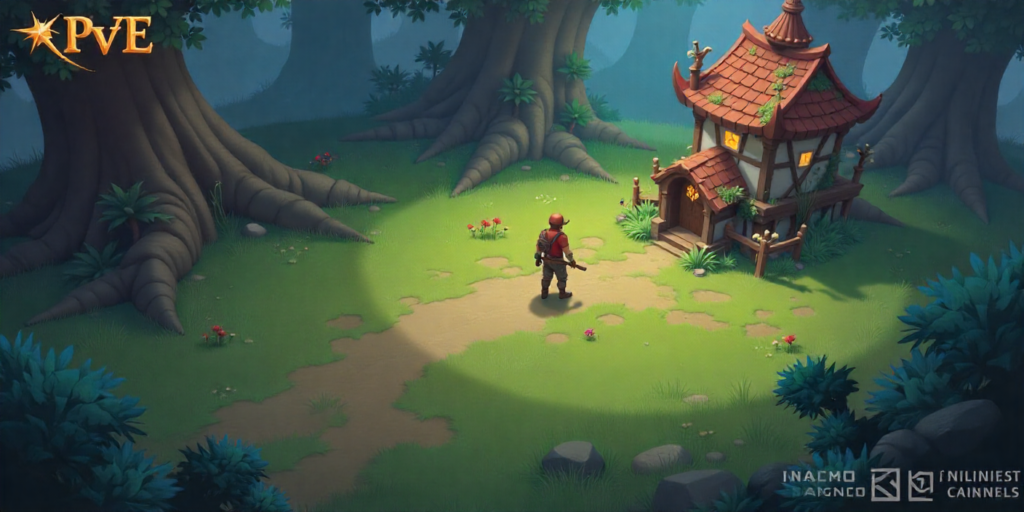

Introduction: Why People Keep Talking About PvE
If you’re new to gaming or just getting deeper into it, you’ve probably come across the term PvE again and again. It appears in game descriptions, YouTube videos, forums, and even in casual gaming conversations. Naturally, many people start wondering: what is PvE in gaming, and why does everyone talk about it like it’s such a big deal?
The truth is, PvE is one of the most common and important concepts in gaming. However, for beginners, the term can feel confusing or overly technical. This article is here to change that. No complicated jargon, no overthinking — just a simple, honest explanation of PvE that anyone can understand.
What Does PvE Mean in Gaming?
So, what is PvE in gaming exactly? PvE stands for Player versus Environment. In simple terms, it means you are playing against the game itself rather than against other real players. The “environment” refers to everything the game controls — enemies, monsters, bosses, missions, puzzles, and the game world around you.
Instead of competing with other people, PvE challenges you to overcome computer-controlled enemies and complete objectives designed by the developers.
How PvE Works: The Basic Idea
You enter the game world, accept missions or quests, and progress by defeating AI-controlled enemies or solving in-game challenges. These enemies don’t think like real humans — they follow programmed patterns and behaviors.
PvE gameplay often involves:
- Completing missions or quests
- Fighting enemies controlled by artificial intelligence
- Exploring environments and unlocking new areas
- Progressing through a story or campaign
This structure allows players to focus on learning, exploration, and enjoyment without the pressure of human competition.
Common Examples of PvE in Games
PvE comes in many forms, and you’ve likely experienced it without realizing it. Some common PvE examples include:
- Story campaigns where you follow a narrative from beginning to end
- Side quests and optional missions that offer rewards or extra story content
- Dungeons, raids, and boss fights designed to test your skills
- Open-world exploration where enemies and challenges are controlled by the game
Whether you’re playing alone or with friends, all of these experiences fall under PvE.
PvE vs PvP: What’s the Difference?
A lot of confusion around PvE comes from comparing it to PvP.
- PvE (Player vs Environment): You fight enemies created by the game.
- PvP (Player vs Player): You compete directly against other players.
PvE is generally more relaxed and predictable, while PvP tends to be faster, more competitive, and more intense. Some players enjoy the challenge of outsmarting real people, while others prefer the structured and story-driven nature of PvE.
Why Do Players Enjoy PvE So Much?
There are several reasons why PvE is incredibly popular among gamers:
- Lower stress: You don’t have to worry about highly skilled opponents.
- Immersion: PvE often focuses heavily on world-building and storytelling.
- Flexible play: You can play solo or team up with friends cooperatively.
- Learning freedom: You can improve at your own pace without pressure.
For many players, PvE feels more rewarding and enjoyable, especially after a long day.
Is PvE Good for Beginners?
Yes — PvE is often the best starting point for new players.
Since you’re not competing against real people, mistakes feel less punishing. PvE allows beginners to:
- Learn controls and mechanics safely
- Understand game systems gradually
- Experiment with strategies without pressure
That’s why many games introduce players through PvE content before unlocking PvP modes.
Can PvE Be Challenging Too?
A common misconception is that PvE is always easy. In reality, PvE can be extremely challenging.
Many games offer:
- Higher difficulty settings
- Endgame raids and elite bosses
- Complex mechanics requiring teamwork and coordination
In some cases, advanced PvE content can be just as demanding — or even more so — than PvP gameplay.
Popular Games That Focus on PvE
Some well-known games are built heavily around PvE experiences, including:
- Story-driven single-player games like Skyrim
- Co-op PvE games like Monster Hunter
- Online games like World of Warcraft with massive PvE worlds
- Open-world titles that mix exploration with AI combat
These games show how flexible and creative PvE gameplay can be.
PvE in Online and Multiplayer Games
PvE isn’t limited to offline or single-player games. Many online and multiplayer games rely heavily on PvE content.
In these games, PvE often includes:
- Cooperative missions with other players
- Shared open worlds filled with AI enemies
- Group dungeons and large-scale raid battles
This combination allows players to enjoy social interaction without the pressure of direct competition.
Should You Play PvE or PvP?
Choosing between PvE and PvP depends on what you want from gaming. If you enjoy relaxation, storytelling, and teamwork, PvE is likely the better choice. If you thrive on competition and fast-paced action, PvP may be more appealing. The good news is that many modern games let you enjoy both, so you don’t have to limit yourself.
Final Thoughts: What PvE Really Means for Gamers
At its heart, what is PvE in gaming comes down to this: it’s about players engaging with the game world itself. PvE offers freedom, immersion, challenge, and accessibility all in one package.
Whether you’re a complete beginner or an experienced gamer, PvE provides a space to learn, explore, and enjoy gaming on your own terms — and that’s why it remains one of the most loved gaming styles today.