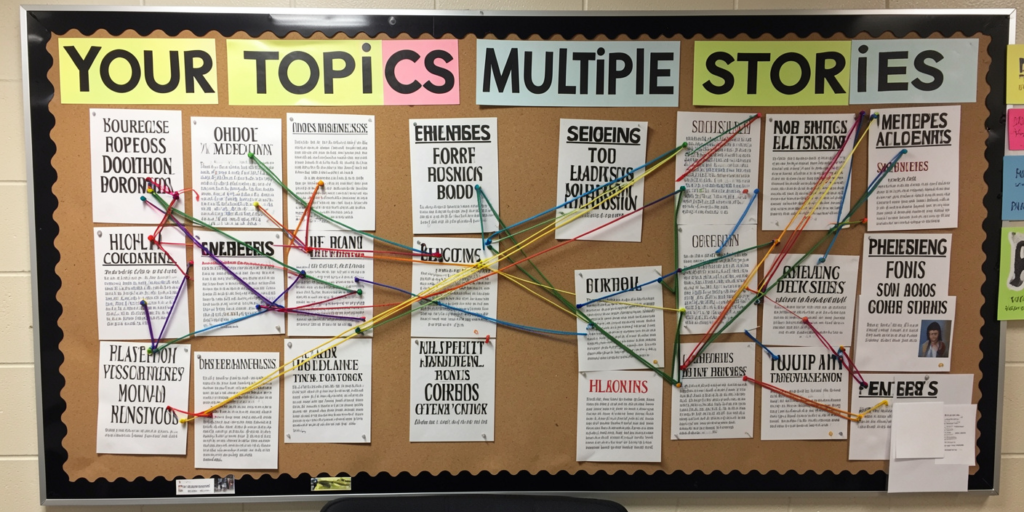

Creating fresh content can feel like an endless struggle. Many creators believe they must constantly come up with new ideas, but the truth is the key to a sustainable content strategy lies in doing more with less. One strong idea can become the foundation for your topics multiple stories, giving you the ability to engage audiences endlessly without starting from scratch each time. By focusing on one core idea and exploring it from multiple angles, you not only save time but also ensure your content stays consistent, cohesive, and meaningful.
Why One Idea Is More Powerful Than You Think
A single idea can serve as a central hub for countless stories. The power of one idea lies in its depth — even the simplest concept can be broken down, examined from different perspectives, and expanded into multiple content pieces.
For instance, consider the idea of “mindful productivity.” This one concept can fuel:
- A blog post on daily mindfulness habits
- A video tutorial on time-blocking techniques
- A social media carousel with quick tips
- A podcast episode featuring expert advice
The Secret Behind Endless Storytelling
Your Topics Multiple Stories’ real secret to endless storytelling is realizing that every idea has multiple layers. By asking simple questions like “Who benefits from this?” or “What problem does this solve?” you can unlock countless angles.
For example, a post about “healthy eating” can become:
- Beginner-friendly guides on meal prep
- Expert insights into nutrition trends
- Recipes targeting specific dietary needs
- Stories of personal transformations
What Does “One Idea, Multiple Stories” Mean?
Your topics multiple stories is a content strategy that focuses on creating multiple outputs from a single concept. Instead of seeing a topic as a one-off blog post or social media update, you view it as a versatile resource.
A topic like “time management” could lead to:
- A long-form blog explaining productivity methods
- Short, actionable social media tips
- A video walkthrough of time-blocking techniques
- An infographic highlighting the most effective strategies
Why Most Creators Run Out of Ideas
Many creators burn out because they treat content creation as a linear process — if a topic is used once, they feel it’s exhausted. This approach is inefficient and can lead to creative blocks. By shifting to a model where one idea generates multiple stories, you reduce the pressure to constantly brainstorm and instead focus on maximizing the potential of what you already have.
Why This Approach Works
Exploring a single idea from multiple angles naturally sparks creativity. Your Topics Multiple Stories don’t have to invent new topics every week; instead, you can find fresh approaches, case studies, or formats for the same idea.
For example, a blog post about “remote work productivity” could inspire:
- A LinkedIn carousel summarizing key tips
- A short video for TikTok demonstrating a daily routine
- An email newsletter with a detailed checklist
Helps Maintain Content Consistency
Consistency is a cornerstone of successful content marketing. By focusing on one idea across multiple formats, your messaging remains cohesive. Readers begin to recognize your voice and expertise, strengthening your brand identity.
Increases Audience Engagement
Audiences appreciate both variety and depth. Presenting the same idea in different ways allows people to consume content in the format they prefer — whether reading, watching, or listening — while still learning something new. This multi-format approach increases engagement and retention.
How to Turn One Topic Into Multiple Stories
Your Topics Multiple Stories approaching your topic from different viewpoints creates new angles. For instance:
- Beginner vs. advanced level
- User vs. creator perspective
- Personal experience vs. expert analysis
Break It Into Subtopics
Large ideas often contain smaller, focused subtopics. For example, “digital marketing” could generate content on:
- SEO strategies
- Social media trends
- Email marketing tips
- Content creation hacks
Use Different Content Formats
Format is a powerful tool for repurposing. A blog post can be transformed into:
- A video tutorial
- A social media carousel
- A podcast episode
- An infographic or checklist
Target Different Audiences
The same idea can appeal to multiple audiences by adjusting tone, examples, and delivery. For instance, “time management” tips could be tailored for:
- Students managing assignments
- Professionals balancing work and personal life
- Entrepreneurs running small businesses
Practical Examples of One Idea, Multiple Stories
Your Topics Multiple Stories consider a topic like “boosting productivity.” Potential stories include:
- “5 Daily Habits That Improve Productivity”
- “Top Productivity Tools for Remote Workers”
- “How to Stay Focused in a Busy Environment”
- “Morning Routines That Lead to Success”
Repurposing for Social Media and Video Content
The same productivity topic can be repurposed into:
- Short TikTok videos highlighting quick tips
- Instagram carousels for visual learners
- A YouTube series demonstrating methods in action
- Email newsletters with deeper insights
Content Strategy Tips for Endless Storytelling

Maintain a list of main topics, subtopics, and potential angles. Your Topics Multiple Stories idea bank becomes a go-to resource whenever you need new content, eliminating the stress of last-minute brainstorming.
Repurpose Content Effectively
Repurposing isn’t just copying; it’s tailoring content for different audiences and platforms. Transform blogs into videos, social posts, podcasts, and infographics, all while staying true to the central idea.
Use Questions to Generate New Angles
Questions help uncover hidden perspectives. For example:
- “What problem does this solve?”
- “Who would benefit most?”
- “What if we approached this from a different angle?”
Common Mistakes to Avoid Your Topics Multiple Stories
- Repeating the Same Angle: Avoid using the same content repeatedly without a new perspective. Audiences notice repetition, and it can reduce engagement.
- Ignoring Audience Intent: Repurposed content must still serve the audience. Focus on what your readers or viewers want to learn or experience from each story.
- Overcomplicating Simple Ideas: Simplicity often resonates best. Trying to overanalyze or overcomplicate a topic can confuse your audience and dilute your message.
Final Verdict
Mastering your topics multiple stories allows you to create consistent, high-value content without constantly searching for new ideas. By exploring one idea from multiple perspectives, subtopics, formats, and audiences, you can tell endless stories that engage your audience, save time, and strengthen your brand voice.
FAQs
How Do I Find New Angles for the Same Topic?
Experiment with different perspectives, formats, and audience segments. Consider beginner vs. expert or personal vs. professional viewpoints.
Can I Reuse the Same Idea Without Duplication?
Absolutely. Adjust the format, audience, or angle to make each piece feel fresh.
How Many Stories Can One Topic Create?
The possibilities are almost limitless. The number of stories depends on how many angles, formats, and audiences you explore.