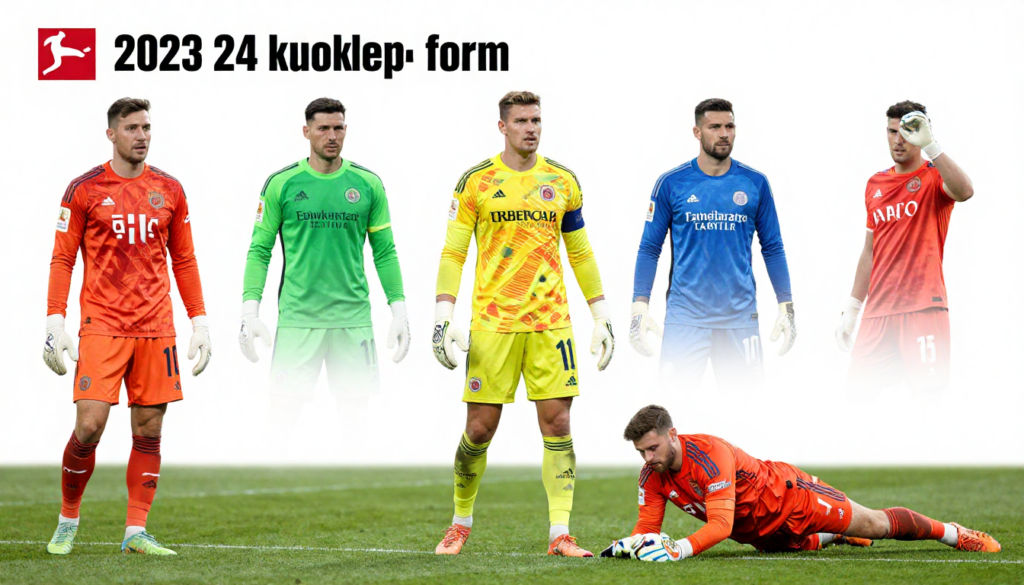

In a league known for aggressive attacking, the quality and style of Bundesliga 2023/24 goalkeepers quietly shifted the line between “good chance” and “certain goal” every weekend. Shot‑stopping metrics, shot maps and post‑shot xG analysis show that some keepers consistently saved more than models expected, while others behind weak defences conceded near the top of the league, changing how often comparable chances actually ended up in the net.
Why goalkeeper form is a rational factor in shot-to-goal probabilities
Standard expected-goals models treat a shot’s conversion chance largely as a function of its location, angle and body part, implicitly assuming a league-average goalkeeper. Post‑shot xG and goals‑prevented frameworks adjust this by assessing how often a particular keeper saves a given quality of shot; those who consistently concede fewer goals than the model expects are effectively raising the bar for finishing against them.
Because Bundesliga 2023/24 featured high shot volumes for certain clubs—especially those with weak backlines that exposed their keepers—differences in shot‑stopping quality had outsized effects. A strong goalkeeper behind a porous defence can still limit the number of “soft” goals and force attackers to finish cleanly, while an out‑of‑form or technically limited keeper turns medium‑difficulty shots into near‑penalty‑level events. For bettors, this means that two fixtures with similar xG profiles can produce different goal outcomes depending on who is in goal.
Standout overworked keepers behind bad defences
Analysts noted that Manuel Riemann at Bochum faced an “utterly obscene amount of shots behind one of the worst defenses in Bundesliga history,” starting 33 games, conceding around 70 goals and making 118 saves in 2023/24. While those raw numbers underline Bochum’s structural problems, they also show that Riemann prevented the defensive record from being even worse, acting as both a sweeper and last line.
From a shot-to-goal probability standpoint, this profile has two effects. First, the sheer volume of shots means that Bochum matches offered many opportunities for goals, supporting higher baseline expectations on totals and “shots on target” props against them. Second, a keeper with aggressive sweeping habits and decent reflexes can still lower the conversion rate on certain one‑on‑one or long‑range efforts, making it dangerous to treat every attempt as automatically going in just because the defence is fragile.
Mechanisms by which elite shot‑stopping alters expected outcomes
For keepers near the top of shot‑stopping rankings, post‑shot xG minus goals conceded is the telling metric: positive values mean they have saved more goals than expected given the shots they faced. These goalkeepers typically combine strong positioning, quick footwork and anticipation with good decision‑making about when to stay and when to sweep, turning high‑xG shots into lower actual conversion rates over time.
At the match level, this shows up in patterns where opponents rack up xG but fail to score in proportion—multiple “big chances missed” according to commentary, some of which are actually big saves. When bettors ignore this and assume that xG must regress immediately, they can overestimate the likelihood that similar shots will find the net in the next game, underpricing the impact of consistently elite goalkeeping form.
Comparing aggressive sweepers and line keepers in live contexts
Profiles like Riemann’s, highlighted for coming off his line more often and further than any other keeper in the big five leagues, show a different risk–reward balance. Aggressive sweepers reduce the number of clean through‑balls and cutbacks that translate into simple finishes, but they also run the risk of mistiming exits, which can turn half‑chances into open‑net goals. Traditional line keepers concede more shots inside the box but may position themselves better for saves.
In live betting or shot-based props, this distinction matters. Against a sweeper‑keeper, long passes in behind or high pressing might produce either clear one‑on‑ones (if the keeper misjudges) or broken attacks (if he sweeps well), widening the variance in whether shots are even taken, let alone scored.
Integrating goalkeeper form into a UFABET‑style pre‑match routine
When someone uses an online betting platform to build markets around goals, shots and scorers, incorporating goalkeeper form means shifting from generic assumptions to keeper‑specific priors. A bettor preparing for a Bundesliga matchday might first consult a goalkeeping stats source—looking at save percentage, post‑shot xG minus goals, and shots faced per 90—to identify which keepers are overperforming or underperforming expectations. With that context, logging into ufabet168 becomes an exercise in aligning prices with these realities: in fixtures where an in‑form keeper faces a high‑volume attack, it may be rational to temper enthusiasm for overs or “anytime scorer” props, while matches featuring a struggling keeper behind a leaky defence could justify more aggressive positions on “both teams to score” or higher team totals if odds have not fully adjusted. The crucial step is to treat the platform’s odds as hypotheses about neutral shot‑to‑goal rates and then adjust your willingness to back them based on whether goalkeeper data suggests those rates are realistically higher or lower in this specific matchup.
List: practical indicators that a goalkeeper is changing shot conversion rates
Because goalkeeper performance is often buried behind team narratives, a short list of indicators helps flag when a keeper is materially affecting conversion probabilities. These indicators draw on public analytics and match reports.
Key signs include:
- Consistently positive or negative post‑shot xG minus goals values over a large sample – Overperformance means more saves than expected; underperformance means more goals conceded than shot quality suggests.
- High save percentage on shots inside the box – Indicates strong reflexes and positioning on the most dangerous attempts, altering the usual xG-to-goal relationship.
- Unusually high or low goals conceded compared to team xGA – Suggests either a keeper saving the defence or magnifying its problems.
- Shot maps showing repeated concessions from specific zones – For example, long‑range weaknesses or problems at the near post.
- Match reports praising or criticising the keeper’s influence across multiple games – Persistent narratives of “saved them again” or “another mistake” often track real performance trends.
Interpreting this list helps distinguish between one‑off good or bad days and sustained form. Only when several indicators point in the same direction should you materially adjust your expected shot‑to‑goal rates for betting purposes.
Table: linking goalkeeper profiles to betting implications on “shots in / shots out”
A compact table can connect broad goalkeeper archetypes to practical impacts on whether shots are likely to go in, stay out, or even be taken in the first place.
| Goalkeeper profile type | Typical statistical/behavioural markers | Impact on shot-to-goal and related bets |
| Elite shot‑stopper behind solid defence | Positive PSxG‑minus‑goals, high save %, low xGA per shot faced | Lowers conversion on average chances; unders and “no scorer” props gain plausibility |
| Elite shot‑stopper behind weak defence | Positive PSxG‑minus‑goals but many shots faced and goals conceded | High chance volume but fewer “soft” goals; supports SOT and BTTS more than extreme overs |
| Average keeper in balanced system | PSxG near zero, save % around league average | Shots convert roughly as xG models suggest; no major adjustment |
| Error‑prone or out‑of‑form keeper | Negative PSxG‑minus‑goals, visible mistakes, low save % | Medium‑xG shots score more often; favours overs, BTTS and scorer props |
Using this table when scanning fixtures, you can quickly adjust expectations: a match between two elite keepers might justify caution on goal-heavy bets even when outfield attacks look strong, while the presence of an error‑prone goalkeeper can tilt marginal goal decisions in favour of higher totals.
Where relying on goalkeeper form can mislead
Goalkeeper performance is highly subject to variance, especially over short periods. A keeper can post excellent post‑shot xG numbers over 10–15 games due to a run of shots that suit his strengths, then regress toward the mean once opponents’ shot profiles change. Conversely, a brief slump can make a solid goalkeeper look unreliable if a handful of low‑xG long‑shots go in or if defensive errors leave him exposed.
Another pitfall is double‑counting defensive weakness: if team xGA is already high due to poor structure, models and odds may already assume that opponents will get good chances; treating the keeper as worse simply because goals conceded are high can misattribute blame, especially in cases like Riemann’s where the keeper is actually mitigating damage. Without carefully separating defensive volume from goalkeeper quality, adjustments to expected shot conversion can overshoot in either direction.
Summary
Analysing Bundesliga 2023/24 goalkeeper form through metrics like post‑shot xG, save percentage and goals prevented shows that keepers do more than merely stand behind team tactics—they tilt the real probability that similar chances become goals. By recognising profiles like elite shot‑stoppers behind weak defences, error‑prone keepers in otherwise solid teams and aggressive sweepers who alter shot creation itself, bettors can refine expectations on overs, BTTS and scorer props beyond generic xG, provided they respect the high variance and potential misattribution that comes with evaluating the most scrutinised position on the pitch.