

In today’s digital landscape, social media has become one of the most influential channels for businesses, creators, and brands to connect with their audiences. However, simply posting content is no longer enough. Success depends on understanding how your content performs, how audiences engage with it, and which strategies deliver the best results.
This is where bouncemediagroupcom social stat becomes a topic of interest for many users seeking insights into social media performance. Metrics such as engagement, reach, audience growth, and content effectiveness provide valuable information that supports smarter marketing strategies rather than relying on guesswork.
What Is Bouncemediagroupcom Social Stat?
The term bouncemediagroupcom social stat generally refers to social media performance information associated with Bounce Media Group. It focuses on presenting measurable data that helps users understand how social media accounts perform across different platforms.
Rather than relying on assumptions, social statistics offer measurable indicators that reveal whether marketing efforts are achieving their intended goals. These insights allow organizations and individuals to evaluate audience interactions, identify successful content, and improve future campaigns based on actual performance.
What Information Does It Provide?
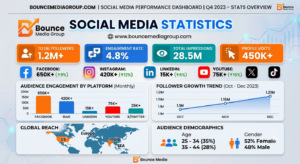
Social media statistics typically include multiple performance indicators that reveal how audiences respond to published content. While the available information may vary depending on the platform or reporting method, common data points often include:
- Audience growth over time
- Engagement levels
- Reach and impressions
- Likes, comments, and shares
- Video performance
- Posting consistency
- Content popularity
- Audience demographics
Who Can Benefit from It?
Understanding bouncemediagroupcom social stat can be valuable for many different users.
- Business Owners: Businesses can monitor brand awareness, customer engagement, and campaign performance while identifying opportunities for growth.
- Digital Marketers: Marketing professionals use social statistics to optimize advertising strategies, evaluate campaign success, and improve return on investment.
- Content Creators: Creators can determine which posts resonate with their audiences and adjust their content strategies accordingly.
- Social Media Managers: Professionals responsible for multiple accounts can use statistical insights to compare performance and refine publishing schedules.
- Students and Researchers: Individuals studying digital marketing or communication trends can use social statistics as practical examples of audience behavior and online engagement.
How Bouncemediagroupcom Social Stat Works
Social media analytics rely on measurable user interactions. Every time someone views, likes, comments, shares, clicks, or watches content, those actions contribute to statistical reports. These interactions are collected and organized into meaningful metrics that help users understand how content performs over specific periods. Instead of evaluating isolated activities, statistical reports combine multiple indicators to create a comprehensive performance overview.
Social Media Platforms Covered
Modern social media reporting often includes information gathered from several popular platforms, such as:
- X (formerly Twitter)
- YouTube
- TikTok
Performance Metrics Tracked
A typical social statistics report focuses on several important performance indicators, including:
- Total followers
- Audience growth
- Engagement rate
- Reach
- Impressions
- Click-through rates
- Shares
- Comments
- Video views
- Content interactions
How Statistics Are Organized
Most social reports organize information into dashboards, charts, or summaries that simplify complex data.
Instead of reviewing thousands of individual interactions, users can quickly identify:
- Monthly growth
- Top-performing posts
- Audience activity
- Platform comparisons
- Engagement trends
Understanding Dashboard Insights
Statistics become more valuable when interpreted correctly.
For example:
- Increasing engagement may indicate highly relevant content.
- Declining reach may suggest algorithm changes or inconsistent posting.
- Strong audience growth often reflects successful brand awareness efforts.
- High impressions combined with low engagement may indicate content needs improvement.
Key Metrics Found in Bouncemediagroupcom Social Stat
Social media success cannot be measured using only follower counts. A complete analysis requires evaluating several performance indicators together. Follower growth measures how quickly an audience expands over time. Steady growth often reflects consistent content quality, audience trust, and effective marketing strategies.
Reach and Impressions
Although frequently confused, reach and impressions represent different concepts. Reach refers to the number of unique users who see content. Impressions represent the total number of times content appears, including repeated views by the same users. Analyzing both metrics together provides better insight into overall visibility.
Likes, Comments, and Shares
These engagement indicators reveal how audiences respond emotionally and socially to published content.
- Likes indicate positive reactions.
- Comments demonstrate deeper engagement.
- Shares often suggest highly valuable or informative content.
Video Performance
As video content continues to dominate digital marketing, performance metrics become increasingly important.
Video statistics commonly include:
- Total views
- Watch time
- Completion rate
- Viewer retention
- Audience interaction
Audience Demographics
Knowing who interacts with content is just as important as understanding how they engage.
Audience insights may include:
- Age groups
- Geographic locations
- Gender distribution
- Device usage
- Active hours
Content Performance Trends
Rather than analyzing individual posts separately, identifying long-term trends provides more valuable insights.
Trend analysis helps answer questions such as:
- Which topics consistently perform well?
- Which content formats generate the highest engagement?
- When is the audience most active?
- What posting schedule delivers the strongest results?
Why Bouncemediagroupcom Social Stat Matter
Brand awareness represents how familiar audiences are with a company or creator. Social statistics help evaluate whether more people are discovering, recognizing, and interacting with published content over time. Growing reach and consistent engagement often indicate expanding visibility.
Improving Content Strategy
One of the biggest advantages of performance analytics is the ability to improve future content.
Instead of relying on assumptions, marketers can identify:
- Popular content categories
- Effective posting schedules
- Preferred media formats
- Audience interests
Understanding Audience Behavior
Every interaction reveals something about audience preferences.
Statistics help answer important questions:
- Which topics attract attention?
- What motivates users to comment?
- Which content encourages sharing?
- When are audiences most active?
Tracking Campaign Performance
Marketing campaigns require measurable outcomes. Social statistics make it easier to determine whether campaigns successfully increase awareness, engagement, website traffic, or conversions. Comparing results before and after campaigns also supports continuous optimization.
Making Data-Driven Decisions
Successful digital marketing depends on informed decision-making. Instead of relying on personal opinions or assumptions, statistical analysis provides objective evidence that supports:
- Budget allocation
- Content planning
- Audience targeting
- Platform selection
- Campaign optimization
Benefits of Using Bouncemediagroupcom Social Stat
Understanding bouncemediagroupcom social stat offers several practical advantages for businesses, marketers, and creators aiming to improve their online presence. Rather than relying on guesswork, users can make informed decisions backed by measurable performance data.
Better Marketing Insights
Social statistics provide a clearer picture of what is working and what needs improvement. By analyzing engagement, reach, and audience behavior, marketers can refine their strategies and create content that better aligns with user interests.
Easier Performance Monitoring
Tracking key metrics over time makes it easier to measure progress. Instead of evaluating individual posts in isolation, users can identify long-term trends, monitor campaign results, and assess overall account growth more effectively.
Competitive Awareness
Reviewing social performance data helps organizations understand how their digital presence compares within their industry. This awareness can inspire new content ideas, reveal opportunities for improvement, and encourage continuous optimization without relying solely on assumptions.
Improved ROI Tracking
Marketing investments become more meaningful when supported by measurable results. Social statistics help determine whether campaigns are generating engagement, expanding audience reach, or contributing to broader business objectives, making it easier to evaluate return on investment.
Smarter Content Planning
Historical performance data serves as a valuable resource for future planning. Identifying successful content formats, posting schedules, and audience preferences enables businesses and creators to develop more effective publishing strategies that support consistent long-term growth.
How to Interpret Social Stat Data Effectively
Bouncemediagroupcom Social Stat goes beyond reading numbers on a dashboard. The real value lies in identifying patterns, measuring progress, and making informed decisions that support long-term growth. Whether you manage a business account or a personal brand, learning to interpret data correctly helps you improve future performance rather than relying on assumptions.
Identify Meaningful Trends
Individual posts may perform differently due to timing, audience behavior, or trending topics. Instead of focusing on one successful or unsuccessful post, analyze data over weeks or months. Consistent trends provide a more accurate picture of audience preferences and overall account performance.
Compare Short-Term and Long-Term Performance
Short-term metrics can show the immediate impact of a campaign, while long-term data reveals sustainable growth. Comparing monthly or quarterly reports helps identify whether improvements are temporary or part of a lasting trend.
Measure Engagement Quality
High engagement numbers are encouraging, but quality matters more than quantity. Comments that generate meaningful discussions or shares that expand your content’s reach often provide greater value than simple likes.
Look for indicators such as:
- Meaningful conversations
- Repeat audience interactions
- Shares by relevant users
- Positive audience feedback
Spot Growth Opportunities
Analytics can reveal untapped opportunities. For example, if video posts consistently outperform image posts, increasing video production could improve future engagement. Similarly, identifying the best posting times can help maximize visibility without increasing publishing frequency.
Avoid Common Misinterpretations
Statistics should always be viewed in context. A temporary drop in engagement does not necessarily indicate poor performance. Factors such as holidays, industry trends, or algorithm updates may influence results. Avoid making major strategic decisions based on isolated data points.
Read more: Growthscribe Marketing Agency Review: Features, Services, and Benefits
Best Practices for Improving Social Media Performance
Maintaining a regular posting schedule keeps your audience engaged and helps establish trust. Bouncemediagroupcom Social Stat consistency also allows platforms to recognize active accounts, which may improve content visibility over time.
Create Audience-Focused Content
The most successful content addresses the interests and needs of your target audience. Educational posts, helpful tips, case studies, behind-the-scenes updates, and interactive posts often encourage stronger engagement than overly promotional material.
Monitor Analytics Regularly
Review performance reports on a regular basis instead of waiting until the end of a campaign. Frequent analysis allows you to identify changes quickly and make timely adjustments when necessary.
Optimize Posting Times
Different audiences are active at different times. Testing various publishing schedules helps identify when followers are most likely to engage with your content.
Use Data to Improve Strategy
Analytics should support decision-making rather than simply reporting results. Use insights to refine content topics, posting frequency, visual formats, and audience targeting.
Experiment with Different Content Formats
Images, videos, infographics, short-form clips, live sessions, and carousel posts each serve different purposes. Testing multiple formats helps determine which style resonates most with your audience.
Common Challenges When Analyzing Bouncemediagroupcom Social Stat
Many people mistakenly judge success by follower numbers alone. While audience growth is important, engagement, retention, and meaningful interactions often provide a more accurate picture of performance.
Misreading Engagement Metrics
High engagement does not always translate into business success. Analyze engagement alongside website traffic, lead generation, or conversion goals to gain a complete understanding of campaign effectiveness.
Ignoring Audience Quality
A smaller, highly engaged audience can often generate better long-term results than a large audience with little interaction. Prioritize building genuine relationships over simply increasing follower counts.
Data Fluctuations
Performance naturally changes over time. Viral content, seasonal events, and marketing campaigns can create temporary spikes or declines. Evaluate long-term trends before making strategic adjustments.
Tips for Beginners Using Bouncemediagroupcom Social Stat
- Start with Core Metrics: Focus on fundamental indicators such as engagement rate, reach, follower growth, and impressions before exploring advanced analytics.
- Track Monthly Progress: Monthly reporting provides a balanced perspective and makes it easier to recognize gradual improvements.
- Set Realistic Goals: Establish measurable objectives, such as improving engagement or increasing audience reach, rather than expecting immediate viral success.
- Compare Performance Over Time: Historical comparisons help identify successful strategies while reducing the influence of temporary fluctuations.
Advanced Strategies for Social Media Analysis
- Benchmark Performance: Compare your performance with previous campaigns or industry standards to identify strengths and opportunities for improvement.
- Analyze Content Trends: Study which topics consistently generate interest and use these insights to guide future content planning.
- Segment Your Audience: Breaking down analytics by location, age group, interests, or device type allows for more personalized communication and stronger audience engagement.
- Evaluate Campaign Performance: Measure campaign results using predefined objectives such as engagement, traffic, or conversions.
Bouncemediagroupcom Social Stat vs. General Social Media Analytics
| Feature | Bouncemediagroupcom Social Stat | General Social Media Analytics |
| Primary Focus | Social media performance insights | Broad analytics across multiple platforms |
| Key Metrics | Engagement, reach, followers, content performance | Platform-specific performance data |
| Best For | Understanding overall social presence | Measuring campaign and account performance |
| Decision Support | Strategic planning and optimization | Daily monitoring and reporting |
| Audience Insights | Helps identify audience behavior trends | Varies depending on platform features |
| Long-Term Analysis | Supports trend evaluation | Available but often platform-dependent |
Common Myths About Bouncemediagroupcom Social Stat
- More Followers Always Mean Greater Success: A large audience may increase visibility, but meaningful engagement is a stronger indicator of long-term success.
- High Reach Guarantees Conversions: Reach simply measures visibility. Conversions depend on content quality, audience relevance, and effective calls to action.
- Viral Content Creates Lasting Growth: Although viral posts can generate significant attention, sustainable growth usually comes from consistent, valuable content that builds audience trust over time.
- Engagement Is the Only Metric That Matters: Engagement is important, but it should be evaluated alongside reach, impressions, audience retention, website traffic, and business objectives to gain a complete understanding of performance.
Future Trends in Social Media Analytics
- AI-Powered Analytics: Artificial intelligence is making it easier to identify patterns, automate reporting, and generate actionable insights from large datasets.
- Predictive Performance Analysis: Rather than simply reporting historical data, analytics tools are increasingly using predictive models to forecast audience growth, engagement trends, and campaign performance.
- Cross-Platform Reporting: As brands expand across multiple social networks, unified dashboards that combine data from several platforms are becoming more valuable for strategic decision-making.
Final Verdict On Bouncemediagroupcom Social Stat
Understanding social media performance is no longer optional in today’s competitive digital environment. The insights provided through analytics help businesses, marketers, and content creators make informed decisions rather than relying on assumptions. By tracking key metrics such as engagement, audience growth, reach, impressions, and content performance, it becomes easier to identify successful strategies and areas that need improvement.