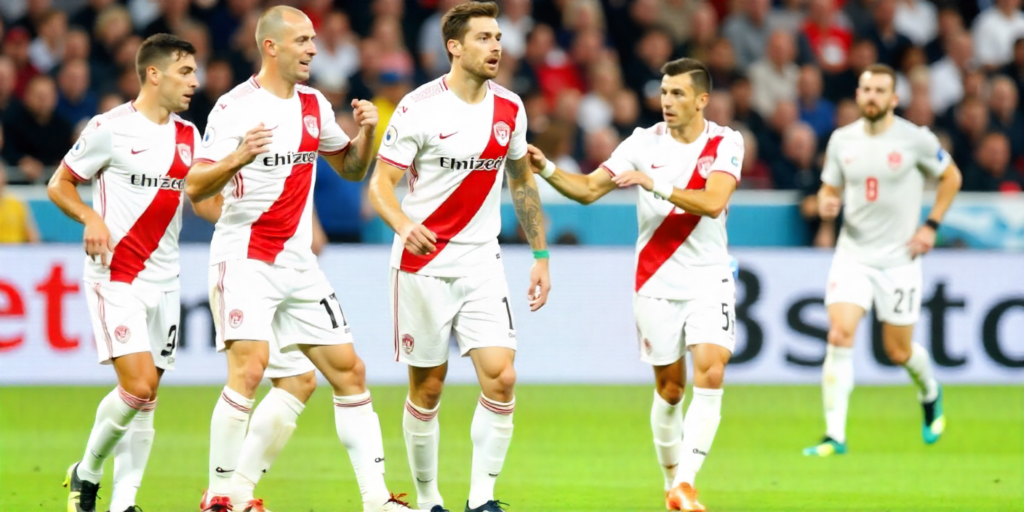

Form decline in the Bundesliga rarely appears without warning. Before results deteriorate visibly in the league table, subtle performance shifts begin to surface in match behavior, structure, and decision-making. Recognizing these early signals requires looking beyond wins and losses and focusing instead on how teams arrive at their outcomes. Declining form is usually a process, not an event, shaped by accumulating inefficiencies rather than sudden collapse.
Why Results Alone Are a Delayed Indicator
League results often lag behind performance reality. A team can collect points while underlying effectiveness erodes, especially if finishing variance or favorable scheduling masks deeper issues. When this happens, the league table becomes a poor diagnostic tool for current form.
The cause is outcome bias. Goals, penalties, and isolated moments influence results more than sustained control. The outcome is misinterpretation of team strength. The impact is delayed recognition of decline, which becomes obvious only after several negative results have already occurred.
Changes in Chance Quality Rather Than Quantity
One of the clearest early signs of declining form is deterioration in chance quality. Teams may continue to register similar shot counts, but the locations and conditions of those shots worsen. Attempts shift away from central zones, and possessions end with forced decisions rather than structured entries.
Before identifying specific indicators, it is important to note that raw shot numbers often hide inefficiency. The context of shots matters more than volume.
- Increasing proportion of shots from outside the box
- Fewer touches inside the penalty area per attack
- Reduced success from cutbacks and central passes
- Higher dependency on individual actions rather than combinations
These patterns matter because they reflect breakdowns in coordination. When chance quality declines, teams rely on lower-probability actions to score. Over time, this reduces goal output even if activity levels remain unchanged.
Loss of Control in Non-Scoring Phases
Form decline often appears first in moments without the ball. Teams struggling tactically begin to lose control of transitions, second balls, and defensive spacing. These issues rarely show immediately in goals conceded but gradually tilt matches against them.
The cause is structural imbalance. Pressing becomes less synchronized, distances between lines increase, and recovery speed declines. The outcome is sustained opponent pressure. The impact is erosion of territorial control that eventually leads to negative results.
Substitution Patterns and Tactical Stagnation
Another warning sign is predictable or ineffective substitution behavior. Coaches under pressure often delay changes or repeat the same adjustments regardless of opponent or match state. This rigidity suggests limited solutions rather than confidence.
When substitutions fail to alter match rhythm, teams become easier to manage. Opponents anticipate late-game behavior and adjust accordingly. Over several weeks, this stagnation contributes to visible decline even if starting lineups remain strong.
Statistical Markers That Signal Decline
Quantitative indicators help confirm what visual analysis suggests. These metrics become meaningful when they trend consistently rather than fluctuate randomly.
Before reviewing the table, it is important to understand that these values indicate direction, not absolute quality.
| Indicator | Stable Form | Declining Form |
| Expected goals difference | Positive, steady | Shrinking or negative |
| Ball recoveries in opposition half | Consistent | Falling |
| Fouls conceded under pressure | Stable | Increasing |
| Pass completion in final third | Balanced | Declining |
Interpreting this table highlights a key insight. Declining teams do not fail everywhere at once. Instead, control metrics weaken first, followed by chance creation and results.
Market Signals That Reflect Form Deterioration
From an educational perspective, markets often respond to form decline before it becomes obvious in results. Odds adjustments frequently reflect concerns about sustainability rather than immediate outcomes.
When monitoring these shifts, some readers observe how pricing evolves across different betting environments. Under conditions where a team’s performances look increasingly fragile despite stable results, reviewing odds behavior on platforms such as UFABET168 can provide contextual clues. If prices drift gradually week by week on a betting interface without dramatic news triggers, it often indicates that markets are recalibrating expectations based on structural decline rather than isolated events. This observation supports form analysis rather than replacing it.
When Decline Is Misread or Overstated
Conditional Scenarios That Distort Interpretation
Not every dip in performance signals true decline. Short-term drops can result from fixture difficulty, tactical experimentation, or temporary squad rotation. In these cases, metrics often recover quickly once conditions normalize.
Misreading these situations leads to false conclusions. True decline persists across different opponents and game states, while temporary disruption resolves without structural change.
Psychological and Behavioral Indicators
Mental fatigue contributes significantly to form deterioration. Teams under sustained pressure begin to show hesitation in decision-making and reduced confidence in execution. These signs are visible in slower ball circulation, fewer forward passes, and increased reliance on safe options.
The psychological cause is cumulative stress. The outcome is risk avoidance. The impact is predictable attacking patterns that opponents exploit more easily over time.
Summary
Identifying Bundesliga teams entering a poor run of form requires focusing on processes rather than results. Declining chance quality, loss of control in transitional phases, tactical stagnation, and subtle market signals combine to reveal early deterioration. While not every fluctuation indicates genuine decline, consistent structural weakening across matches provides a reliable framework for recognizing when form is truly dropping.